How CoinMinutes Builds a Culture of Continuous Learning Among Its Team


 Locked


How CoinMinutes Builds a Culture of Continuous Learning Among Its Team
 
|
This post was updated on .
Crypto knowledge evolves about five times faster than traditional software development. This speed has real business consequences.
I've seen this firsthand as a consultant to blockchain companies. Your teams probably know the frustration of constant relearning - just when you master one concept, three new ones pop up. You wonder if you're studying the right things, and if your knowledge will still matter next month. CoinMinutes tackles this through a two-track approach that separates lasting knowledge from evolving applications, helping team members focus our learning efforts better. The Philosophy: Four Counterintuitive Principles CoinMinutes' learning culture is built on four principles that go against typical corporate approaches. First, knowledge belongs to everyone, not individual experts. Second, learning happens within the workflow, not as a separate activity. Third, we value using knowledge over just collecting it. Fourth, we care more about learning speed than volume. 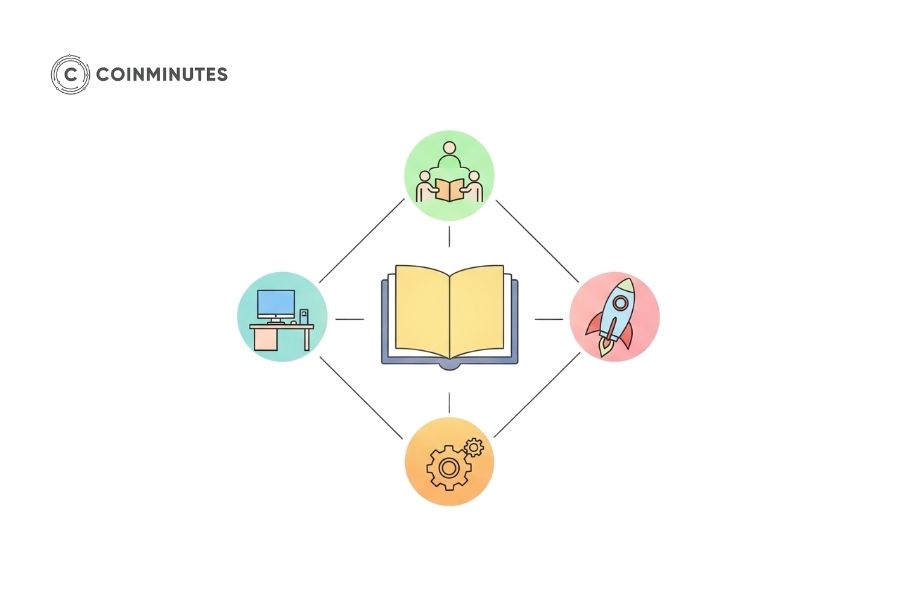 This differs significantly from standard corporate programs with their focus on credentials, standardized training, and isolated learning events. Instead, CoinMinutes creates a constant knowledge flow. Leaders show commitment through visible participation. CoinMinutes' leadership spends 15% of our work hours on structured learning and documentation. Our CEO regularly shares his learning journals and runs monthly "Knowledge Gap" sessions where he openly discusses concepts he's struggling with - which shocked me when I first saw him admit complete confusion about certain DeFi yield strategies. Knowledge democracy prevents information hoarding. No team member is allowed to be the sole expert on any critical topic - a policy that initially met resistance but ultimately made the whole team stronger. The Knowledge Architecture Behind the Scenes CoinMinutes crypto weaves learning into daily operations through what we call the Knowledge Mesh Network (KMN). Unlike top-down knowledge management, KMN spreads learning responsibilities across the organization while maintaining central organization. We protect learning time through "deep learning blocks" - 90-minute periods scheduled three times weekly for each team member. These blocks show up in shared calendars as unavailable time, treated as important as client meetings. Teams coordinate these blocks to ensure coverage while providing uninterrupted learning time. Our budget backs this priority. CoinMinutes puts 8% of total payroll costs toward learning activities, including external courses, conferences, and dedicated learning time. This investment pays off through better problem-solving and faster solutions. The Technology That Makes It Work (Usually) The tech supporting this combines common tools in uncommon ways. Our system connects collaborative documentation (Notion), technical repositories (GitHub), communication channels (Slack), visual explanation (Loom), and spaced repetition learning (Anki). Instead of jumping between separate systems, team members access these tools through integrated workflows triggered by specific actions. Our knowledge system organizes information in three tiers: foundational concepts (slow-changing), implementation approaches (moderate evolution), and current applications (rapid change). This helps team members focus their learning where it matters most. Learning analytics help spot knowledge gaps across the organization. The system tracks frequently searched terms, unanswered questions, and areas where documentation exists but isn't being used. These metrics guide learning priorities. When team members open the knowledge system, they see a clean interface showing relevant information rather than an overwhelming repository. It's like opening a well-organized toolbox where exactly what you need is within reach. Daily Habits That Build Knowledge Muscle Daily practices strengthen our learning culture through consistent, manageable activities that add up over time. These habits turn abstract commitments into concrete behaviors. Mornings start with 15-minute "knowledge standups" where team members share one new insight from yesterday and one learning goal for today. These standups focus attention on continuous learning rather than just completing tasks. Learning blocks follow a clear format: 20 minutes gathering information, 40 minutes deep engagement, 20 minutes planning application, and 10 minutes documentation. This prevents aimless browsing while ensuring practical use. Our just-in-time approach connects study directly to active projects. When team members hit knowledge gaps during work, they flag these in a shared "Learning Needs" document. Others with relevant expertise provide targeted resources or mini-tutorials, creating an immediate feedback loop. The physical environment supports this culture too. Meeting rooms have "learning capture" stations with whiteboards and recording capabilities to document insights from discussions. Monitors throughout the office show recent team learnings and current focus areas. Surprisingly, we found learning works better when team members study topics slightly outside their direct responsibilities. This creates unexpected connections and innovations. Try this today: Start a simple "One Thing I Learned" habit where you write down a single new insight at day's end. Share it with a colleague and ask what they learned. This tiny habit can become the foundation of a learning culture. Motivation Without Micromanagement CoinMinutes cryptocurrency keeps learning momentum through an accountability system that balances measurement with motivation. We focus on application rather than abstract knowledge gathering. The system tracks three metrics for each person: knowledge contribution (insights shared), knowledge application (using new concepts in work), and knowledge connections (linking ideas across domains). These metrics appear on personal dashboards visible only to the individual and their development coach. Peer coaching forms the backbone of this system. Each team member pairs with someone from a different functional area for monthly learning reviews. These cross-functional partnerships prevent knowledge silos while creating psychological safety. Recognition happens through a "Breakthrough Insight" channel in Slack where people highlight valuable learnings from colleagues. We also have a quarterly "Knowledge Impact Award" for learning with measurable business outcomes. We emphasize applying knowledge over just acquiring it. Team members must document how they've used new concepts, building a library of practical applications rather than theoretical understanding. Some worried this system would create unhealthy competition or encourage shallow learning to "game the metrics." We addressed this by focusing on quality over quantity and keeping individual metrics private while publicly celebrating team-level progress. From Theoretical Knowledge to Crisis Response CoinMinutes balances deep technical knowledge and practical application through a dual-track system that recognizes our interdependence. This prevents both impractical theorizing and shallow implementation. 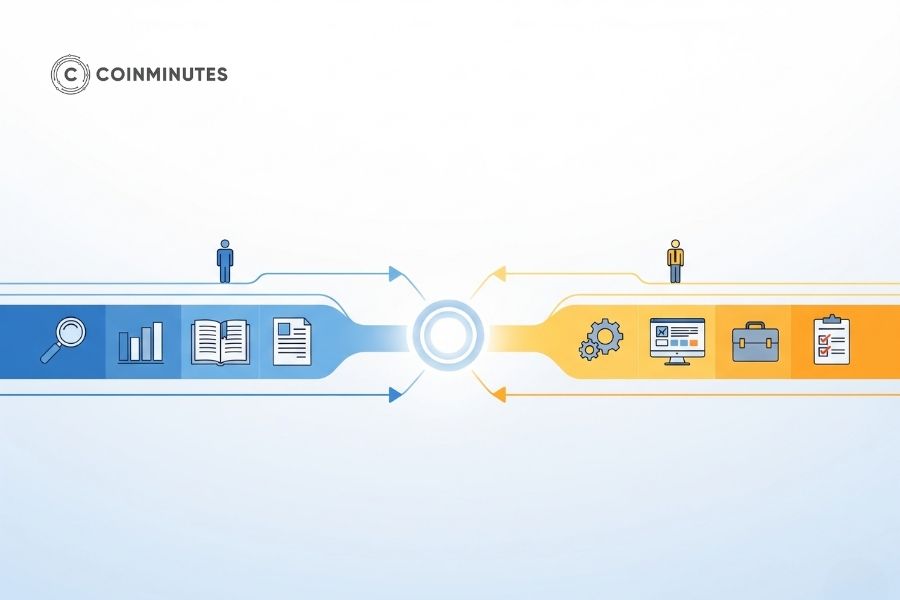 Our rotation system moves team members between "explorer" and "builder" roles on eight-week cycles. Explorers focus on emerging technologies and research. Builders apply established knowledge to client solutions. This prevents knowledge stratification while ensuring both innovation and execution. This approach has created some tension. There's ongoing debate between technical leadership and operations about rotation frequency. Senior developers argue that eight weeks isn't enough time for deep protocol research, while operations thinks longer cycles create service gaps. They're testing a compromise with different rotation periods based on topic complexity, but tensions remain. Cross-functional learning happens through bi-weekly "Knowledge Exchange" sessions where specialists explain concepts from their domains to others. These sessions translate specialized knowledge into frameworks that non-experts can use. This approach creates tension between depth and breadth. Specialists develop expertise that generalists can't match, yet generalists create connections specialists might miss. It's like an ecosystem where different species have specific niches while depending on each other. For specialized technical needs, we use "expertise pods" - small groups dedicated to mastering specific domains like ZK-rollup implementations or cross-chain bridges. These pods distill complex information for the broader team while maintaining deep knowledge for innovation. The Messy Reality of Building a Learning Culture CoinMinutes' learning culture evolved through cycles of implementation, failure, adjustment, and refinement - a process that continues today. Looking honestly at these challenges provides realistic expectations for organizations on similar journeys. Resistance and Rebellion Early resistance took several forms. Some viewed structured learning as bureaucratic overhead. Others participated superficially. Technical specialists sometimes resisted sharing knowledge, seeing their expertise as job security. One senior developer nearly quit over what he called "mandatory thought documentation." His protest involved submitting entries that were technically accurate but practically useless - until a crisis showed how his knowledge isolation endangered both clients and colleagues. We addressed these challenges by connecting learning directly to compensation, celebrating knowledge sharing publicly, and showing how collective expertise helped individual effectiveness. We also adjusted time requirements based on role-specific needs rather than imposing uniform expectations. Find More Information: Macroeconomic Connections: How CoinMinutes Links Traditional and Crypto Markets The Social Layer of Crypto: CoinMinutes' Approach to Community Analysis Bumps in the Road Executive support wavered during the 2022 market downturn, when our CFO questioned the learning budget amid revenue pressures. The temporary reduction in learning time created immediate knowledge gaps that took months to repair once funding returned. The system keeps evolving. Current challenges include scaling as the team grows, maintaining knowledge quality without bottlenecks, and balancing specialized versus general knowledge. We're experimenting with ML tools to improve knowledge categorization and retrieval, with mixed results so far. While I've emphasized structured learning throughout this article, some of the most valuable knowledge exchanges happened during unplanned coffee breaks and chance conversations. Leadership still struggles with finding the right balance between formal and informal learning channels. For organizations facing similar challenges, start focused rather than comprehensive. Begin with your most knowledge-dependent team, establish clear metrics tied to business outcomes, and prove value before expanding. This builds credibility for broader adoption. |
|
|
Experience the vibrant heritage of Spain with MadridBullFighting, your trusted gateway to the world of bullfighting. Whether you’re a first-time visitor or a returning enthusiast, securing bullfighting madrid tickets has never been more straightforward. The platform ensures fast booking, clear seating options, and transparent pricing, making it simple to enjoy this cultural spectacle. With user-friendly service and reliable access to Las Ventas, MadridBullFighting transforms tradition into an unforgettable event, connecting you directly to one of Spain’s most iconic experiences.
|
«
Return to Forum
|
1 view|%1 views
| Free forum by Nabble | Edit this page |